
Project: Fighting Entropy
This project started as an exploration into line and shape over multiple plates, each designed to work with at least one or more of the others. It started with zinc plates but ended with a beautifully etched aluminium plate.
Each completed plate was printed onto wet-strength tissue paper (Swedish PatternTrace) so they could be overlaid to assess their compatibility.
Plate 1
I started with a basic traced copy of my initial line work. This was transferred to a zinc plate covered in liquid hard-ground. The lines were then drawn through the resist, the plate was etched in a nitric acid solution, cleaned and a proof print was taken.

Top left: initial line tracing from drawing. Top right: image transferred to hard-ground ready to be drawn through the surface before etching. Bottom: first print on wet-strength tissue.
The plate had an aquatint applied to the surface and was then selectively blocked out in stages, with a period in the acid at each stage. The longer an exposed area was in the acid the darker the tone became. To keep a lighter or mid-tone hard-ground was painted on a specific area thereby stopping the acid from eating into the surface.

Above: completed print with tone printed onto wet-strength tissue.
Plate 2
Tracing paper was placed over the completed first image and the design was drawn for the second plate.

The same etching procedure was undertaken.

Left: plate 2 printed onto wet-strength tissue. Right: plate 1 and 2 printed onto 250gsm BFK Rives
Plate 3
This plate was designed as a linear framework to combine with the previous plates. In this case the zinc plate was placed on a heated flat griddle and ball hard-ground was melted on the surface and applied evenly using a dedicated roller.
This video shows the method in action using a copper plate.
I rolled the ground very lightly, using the method shown above, which created what is known as ‘interference’ across the plate once it was etched because pinpricks or tiny parts of the plate weren’t sufficiently covered by the hard-ground resist. Interference refers to small unintentional marks, scratches or blemishes etched into the surface which are not part of the planned design.

Above: Plate 3 printed onto wet-strength tissue.

Above: Plate 1, 2 and 3 printed together onto 250gsm BFK Rives. Plate 1 is printed mid grey, plate 3 is black, although the difference is hardly discernible.
Plate 4
This was created using an aluminium plate which was longer than the previous zinc plates. It was covered in liquid hard-ground, per the first two, and etched in a copper sulphate bath using the same method as previously detailed.
The initial drawing was produced on tracing paper, as before.

A print was pulled onto 250gsm BFK Rives paper.

This plate was combined with number 2 and they were printed together.

In the above image you can see the importance of using tracing paper to design multiple plates when wanting them to be successfully combined. Although Plate 2 is smaller than Plate 4 they sit well together on the left-hand side where one plate is shorter than the other.
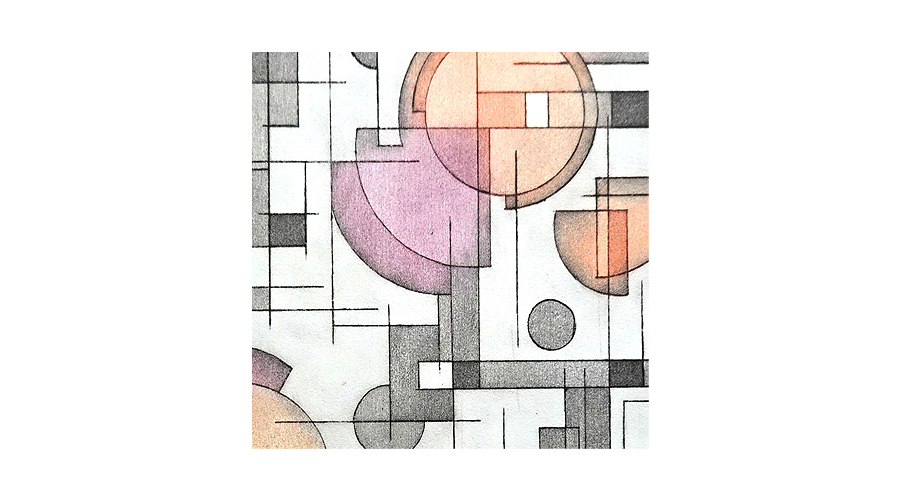
These 4 pieces combine with other techniques to create a wider set of outcomes for my Fighting Entropy project. My next post will cover this progression.



Leave a Reply to Pushing a print project further | Tactual Textiles by ClaireCancel reply