
A couple of weeks ago I taught a 2 day workshop for the Australian Society of Calligraphers in creating and printing collagraphs. This is a group well used to workshops and working on specific projects. Their particular field relies on concentration and attention to detail and most had either no printmaking experience or limited experience some time in the distant past.
I love these types of workshops: working with creatives but people from outside my field, people who are keen learners and ready to give things a go. This particular group reminds me very much of the Paper Artists of Gippsland East who I taught last year; the same enthusiasm and eagerness to explore and experiment despite barely knowing where to start – and what they will come out with.
Many things can be used as a base upon which to build a collagraph plate, otherwise known as the strata or matrix, but my preferred material is mountboard. Using a craft or Xacto knife the board can be scored, enabling layers to be peeled away revealing a different texture within. A Stanley knife is all that’s required if you want to cut specific shapes from a larger piece of board and print them either together or separately. It’s a fun way to make jigsaw style plates which can be inked in different colours which avoids colours running into each other.

Example of a large piece of mountboard, with 7 separate pieces cut away. This enables multiple iterations of the same theme to be printed. You can see more of the above project here.
The 8 participants quickly understood the concept of both removing layers of board and adding to the surface. This sounds obvious but consideration needs to be put into the various levels created on the plate. If cuts are too deep the paper will not be flexible enough to sink into the recesses to pick up ink. If relief items – those adhered to the surface – are too high the paper may create an unprinted halo around them where, again, the print paper is not sufficiently flexible to pick up the detail.


Example of collagraph plate and print with multiple low-level items applied to the surface as well as scoring into the mountboard. Another example can be seen here.
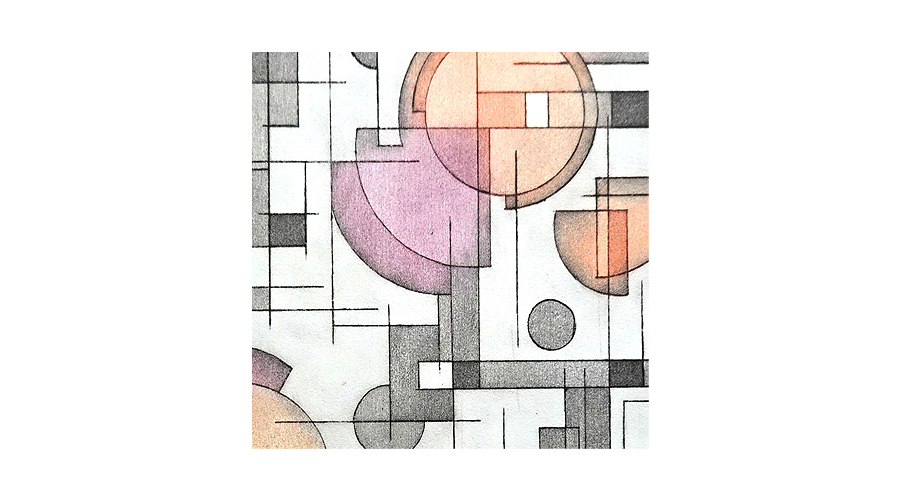
Here are some of the results from the workshop. Each person started out with a plain black print, always a good way to ‘proof’ a plate, to see how the textures are working and if anything needs to be tweaked.
Click on any of the artworks to view larger images


And some of their second prints where colour was applied.


An excellent workshop and fantastic results.


Leave a Reply